Rich Contact Sensing
Capture physical state where vision ends — force, slip, geometry, texture and motion at the point of interaction.
NOWTHE TOUCH INTERFACE FOR PHYSICAL AI
We are building the interface that helps machines perceive contact, learn from interaction, and act with dexterity in the real world.
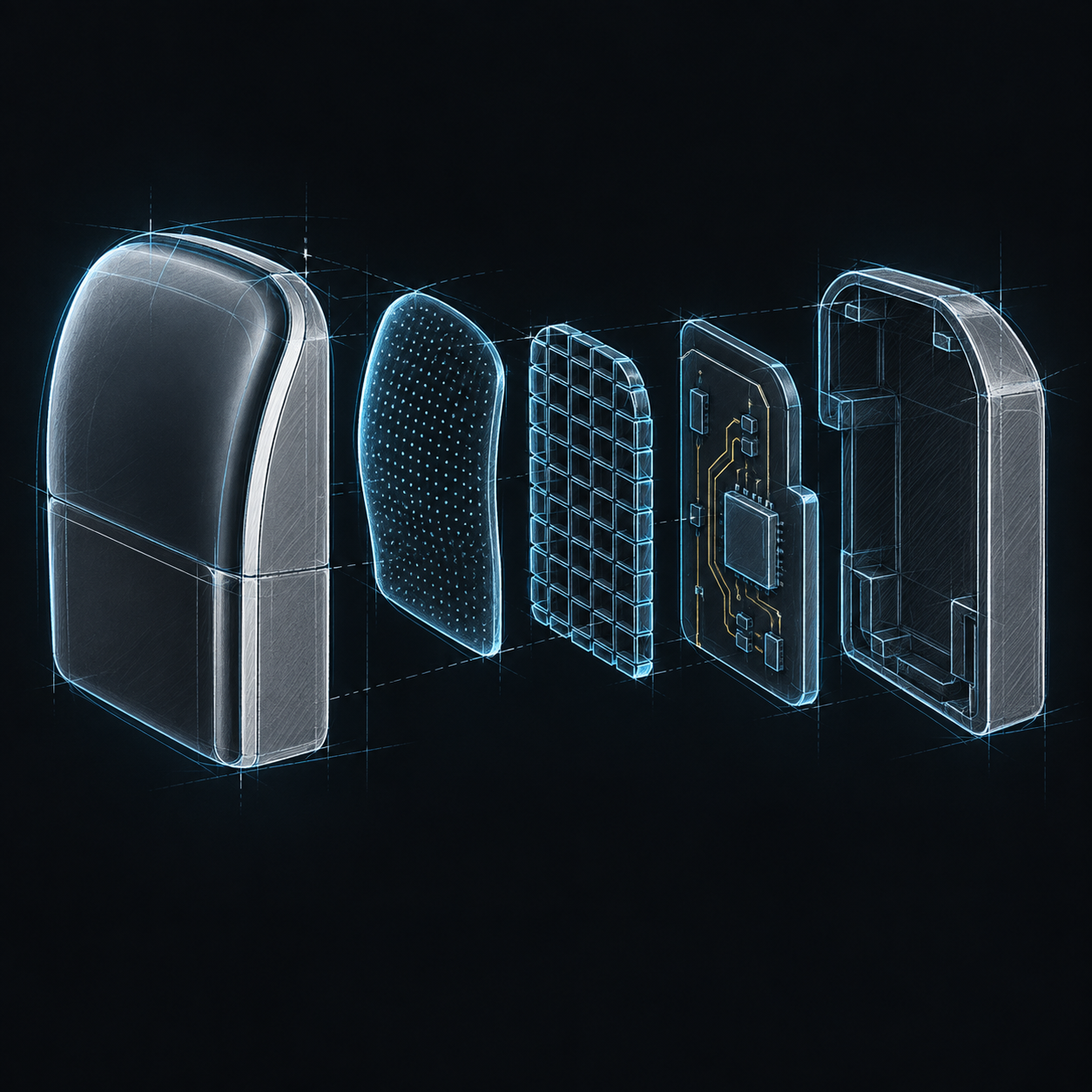
01 — THE MISSING MODALITY
Most failures in manipulation happen at the point of contact — where objects slip, deform, resist, align or break. That state is often invisible. We make it observable, usable and learnable.
02 — FROM TOUCH TO INTELLIGENCE
Capture physical state where vision ends — force, slip, geometry, texture and motion at the point of interaction.
NOWTranslate tactile observations into synchronized, machine-usable signals for control, evaluation and recovery.
NEAR TERMConnect touch, vision, proprioception, action and outcome — turning interaction into structured learning.
BUILDINGCreate reusable representations and manipulation intelligence across tasks, tools and embodiments.
DIRECTION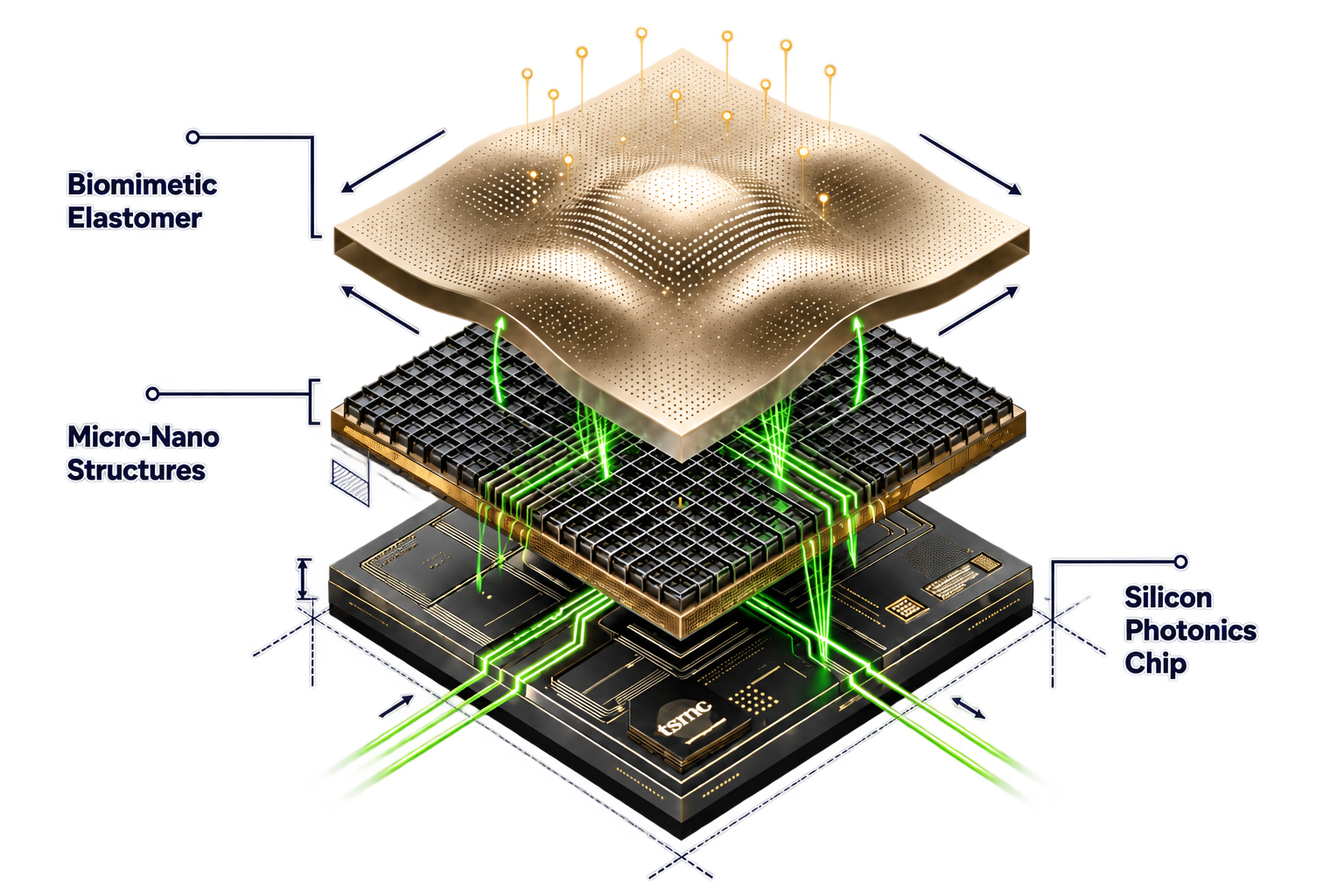
03 — A PHYSICAL FOUNDATION
Rich physical signals begin with a tightly integrated platform — materials, microstructures, optics, electronics, decoding and synchronization engineered as one system.
04 — WHAT BECOMES POSSIBLE
Touch is more than another sensor stream. It can become a new foundation for how robots adapt, recover and generalize.
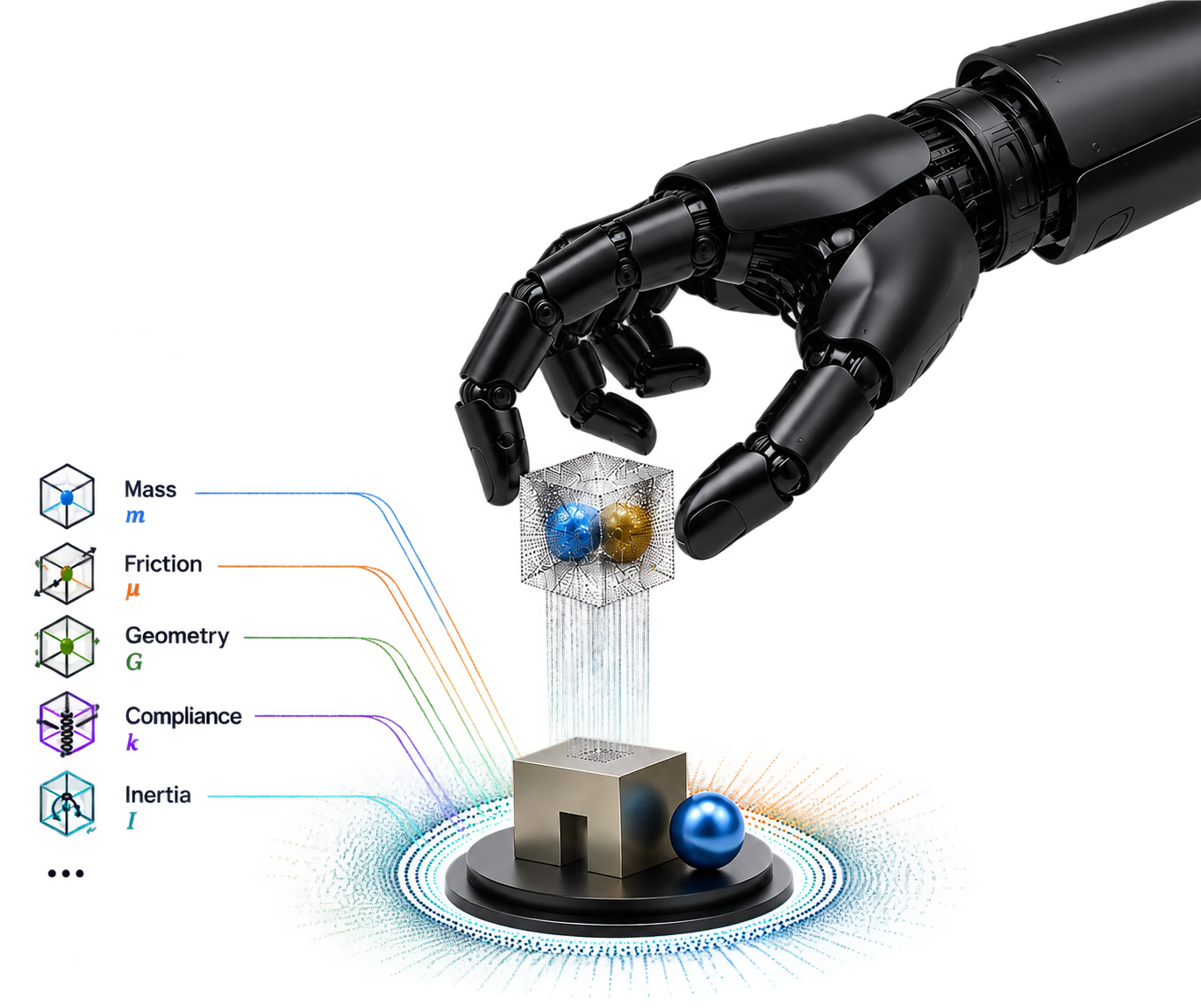
Manipulation that responds continuously to slip, friction, compliance and uncertainty.
Robots that reason through occlusion, multi-contact and in-hand state.
Add synchronized contact state to demonstrations for training, evaluation, correction and recovery.
OUR DIRECTION
Hardware is the beginning. The long-term opportunity is a physical intelligence layer that learns through contact and transfers across the machines that shape our world.
BUILD WITH US
Tell us about the manipulation challenge, research direction or system you are building.